The Wheel of Life: A holistic approach to balance and life satisfaction
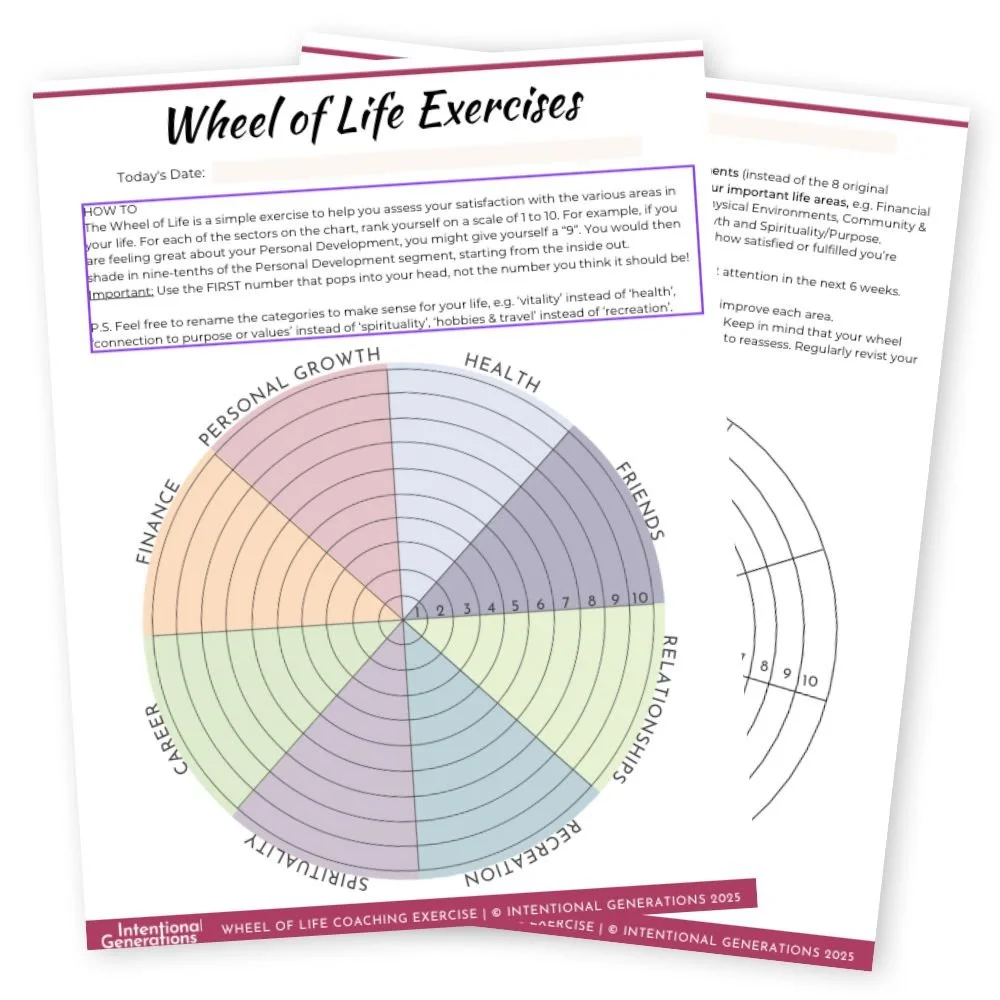
note: We’ve included 2 versions of the Wheel of Life to make it personalisable!
>> Download your Wheel of Life Exercises & Reflection Guide here <<
The Wheel of Life is a simple yet powerful tool commonly used in life and career coaching for visualising all areas of your life at once. The original idea behind the Wheel of Life came from industry pioneer Paul J. Meyer in the 1960s to help people realise their goals.
Imagine your life as a wheel, with each segment of the wheel representing one of the different aspects that is important to you and that contributes to you living a rich, full life. Like a bicycle wheel that was uneven, when one or more areas are neglected, your Wheel of Life becomes uneven, making the journey of life feel bumpy. The Wheel of Life allows you to evaluate each of your important areas, identify imbalances, and take actionable steps to smooth out the ride.

Once you visualise it you see where you may want to make changes or improvements. I regularly use this tool with coaching clients to help them gain clarity, set priorities/goals, and create a more harmonious or energetically sustainable life.
The wheel typically consists of between eight and ten categories essential for a fulfilling life.
Segment names vary, but the themes are usually similar, for example:
Money & Finances (if this title doesn’t resonate with you, you could rename it to ‘financial wellbeing’)
Career & Work
Health & Fitness (I personally like to call this area ‘Vitality’ as I prefer to focus on how I feel physically, strength-wise and flexibly rather than physical appearance)
Fun & Recreation (i.e. hobbies, adventures, travel, experiences/concerts etc)
Physical Environment (home/work)
Community (I call this area ‘Community & Service’)
Family & Friends
Relationship(s) & Love (note: if this isn’t a priority you either remove this category or rename it something else, e.g. ‘self love/care’)
Personal Growth & Learning
Spirituality (this is your connection to purpose / connection to a higher source or belief)
Note: If a template is not available or doesn’t name all of your important areas of life, create a hand-drawn version.
How to use the Wheel of Life
>> Download your Wheel of Life Template here <<
Evaluate your current situation: Start by rating your current satisfaction or sense of fulfilment in each area of the wheel on a scale from 1 to 10. Be honest in your answers. This is about gaining insights, not judging where you are at.
Identify imbalances: Look at your ratings. Are there areas where you feel fulfilled and others where you feel drained or unmotivated? These imbalances often highlight where attention is needed. (Note that it doesn’t have to be the lowest number that you give attention to right now – ask yourself where your attention is drawn to. What do you need right now?)
Set priorities: Once you’ve identified the areas that need attention, prioritise them. Which ones require immediate action? Which ones can be gradually improved?
Create an action plan: Develop specific, measurable actions to improve each area. For instance, if your health/wellbeing rating is low, commit to regular exercise or better nutrition. If your relationships need work, set aside quality time with family or friends. I encourage you to start with one or two areas and focus on those, instead of feeling like you need to fix or solve everything all at once. This isn’t necessarily about getting all areas to a 10, I suggest looking at what could improve your rating by one or two points.
There will be times, when you need to prioritise one area more and that is okay. There is no right or wrong here. For example, if you have taken on a big project or a secondment with your career or you’ve stepped into the role of parenthood or you’re recovering from a health challenge, this might require more focus for that period. You may have to compromise for a short time. Be compassionate with yourself.
Review and adjust: Life is dynamic, and so is your Wheel of Life. Keep in mind that your wheel doesn’t have to be perfectly balanced. This is why it’s important to reassess. Regularly revisit your wheel to assess progress and make adjustments as needed. As one area improves, you may find that others need more focus. I would suggest pulling your Wheel out quarterly, as you move through different phases or seasons in your life and with work.
Reminder: the goal is not to achieve ‘perfection’. Circumstances and priorities change. The aim is to continue the journey toward a life where all parts of your wheel contribute to a smoother, more joyful journey. So, take a moment to reflect, rate your wheel, and start making those small adjustments. You’ll be amazed at how these shifts can lead to profound changes.
Note: Online Wheel of Life versions
While there are benefits to having a physical copy of the Wheel of Life, online versions can be valuable when used solo or coached remotely.
The following tools generate visual copies of the Wheel of Life, based on the individual’s input:
Looking for support with bridging the gap between where you are now and where you want to be?
Coaching can restore that balance by building a bridge between where you are now and where you want to be. The Wheel of Life provides an excellent tool to visualize the gaps that require focus and attention and the changes that need to happen.
Your next steps:
Learn more about coaching here
Book in your free, no-obligation 30 minute coaching call here